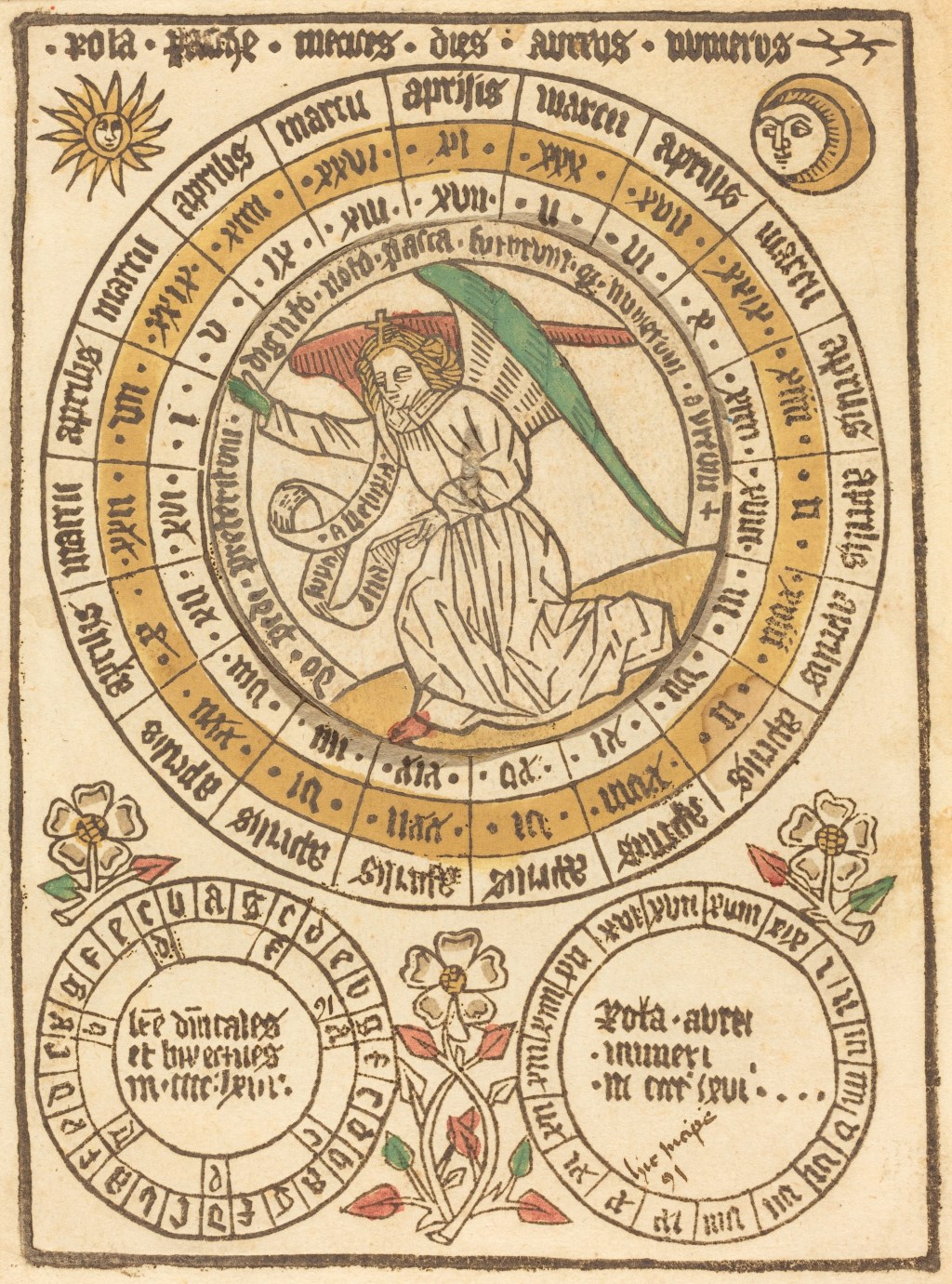
I had this conversation with some friends a few weeks ago.
How do you imagine time?
When you think of the calendar year, what comes to mind? Is it a wheel? A square? A line with a beginning, middle, and end?
What about history?
For me, the year is a wheel, with January at 9:00, March at 12:00, etc. But when I think about history more broadly, and try to place an event into the timeline in my head, I’m rifling through something more accordion-shaped.
In Anthropology 101, you learn pretty early on that time and history are conceived differently in different cultures. In Western society, we’ve mostly taken to a linear view of time: this thing happened, then this, then this, and generally it was a progression of society and technology and culture that culminated with where we are today.
When I sit down to write about a historical time—whether I’m writing fiction or nonfiction—I do imagine time in a mostly linear way, but for me, there are also folds in that timeline that can be pulled open to reveal more detail, like an old-fashioned woman’s fan.
I just asked my husband how he thinks about time, and for him, it’s like an Excel spreadsheet with a tab for every time period.
So I’m curious: How do you conceive of time and history? Is it a straight line, or does it have folds? Is it a spreadsheet of data, or something more organic? Is it cyclical, or a progression?


Leave a Reply